Graz Schumpeter Lectures 2025: Eric Maskin – Theory of Voting
17 to 19 March 2025
About the speaker:
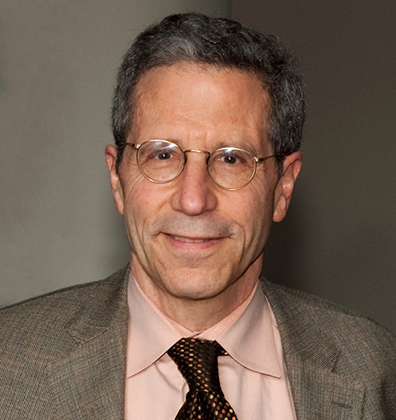
Eric Maskin is Adams Professor and Professor of Economics and Mathematics at Harvard University. He has contributed to game theory, contract theory, social choice theory, political economy and other areas of economics. He received his A.B. and Ph.D. from Harvard University and was a postdoctoral fellow at Jesus College, Cambridge University. From 1977 to 1984, he was a faculty member at MIT (Massachusetts Institute of Technology), from 1985 to 2000 at Harvard, and from 2000 to 2011 at the Institute for Advanced Study. He returned to Harvard University in 2012. In 2007, he received (together with L. Hurwicz and R. Myerson) the Nobel Memorial Prize in Economic Sciences for creating the foundations of mechanism design theory.
Video recordings:
The Graz Schumpeter Lectures 2025 with Professor Eric Maskin were recorded on video and can be accessed via the following links:
| Monday, 17 March 2025, 5 p.m. – 6.30 p.m. |
Lecture 1 – The Arrow Impossibility Theorem You can find the presentation slides here |
| Tuesday, 18th March 2025: 11 a.m. – 12.30 p.m. |
Lecture 2 - A Resolution of Arrow's Theorem You can find the presentation slides here |
| Tuesday, 18 March 2025: 5 pm – 6.30 pm |
Lecture 3 - The Gibbard-Satterthwaite Theorem You can find the presentation slides here |
| Wednesday, 19 March 2025: 11 a.m. – 12.30 p.m. |
Lecture 4 – A Resolution of the Gibbard-Satterthwaite Theorem You can find the presentation slides here |
Two cheers for Nobel Prize winner Eric Maskin
Are we capable of developing intelligent incentive mechanisms that outperform normal market mechanisms, e.g. in the provision of test kits for new epidemics/pandemics such as Covid-19 in 2020? (The latter is just one example of all the cases where we have good reason to believe that normal markets will not function quickly enough or with the right target priorities due to information and coordination problems.)
And are we in a position to reform democratic electoral systems in such a way as to mitigate the massively damaging effects of political polarisation currently afflicting Western democracies?
Nobel Prize winner Eric Maskin of Harvard University has argued specifically that such improved mechanisms are feasible in both cases – and what is more, he is the leading representative of the Nobel Prize-winning economic research programme that conclusively demonstrates why and how these mechanisms will work if the political will to implement the relevant reforms is there.
Such highly relevant messages with regard to crucial current political problems are the first reason why Eric Maskin's research is highly relevant.
But this research is also of paramount importance for a second reason. This importance stems from its contribution to a discussion dating back to the dawn of the modern era about the tensions and prospects of modern societies. In the "big picture" that depicts both the magnificent achievements and the enormous problems of modern, heterogeneous societies, two mathematical theorems clearly and precisely outline the contours of crucial areas of tension: the Arrow theorem and the Gibbard-Satterthwaite theorem – often understood as impossibility theorems. Eric Maskin's work and his Schumpeter lectures in Graz use the two "impossibility theorems" as a starting point. While it is clearer today than ever before that the tensions underlying these impossibility theorems cannot be easily resolved either theoretically or practically, Eric's work points us in the direction of possible solutions that are crucial for the future prosperity or even survival of humanity.
Richard Sturn, Graz Schumpeter Centre, February 2025