Graz Schumpeter Lectures 2026: The Splendors and Miseries of Complex Human Societies
27. bis 29. April 2026
About the speaker:
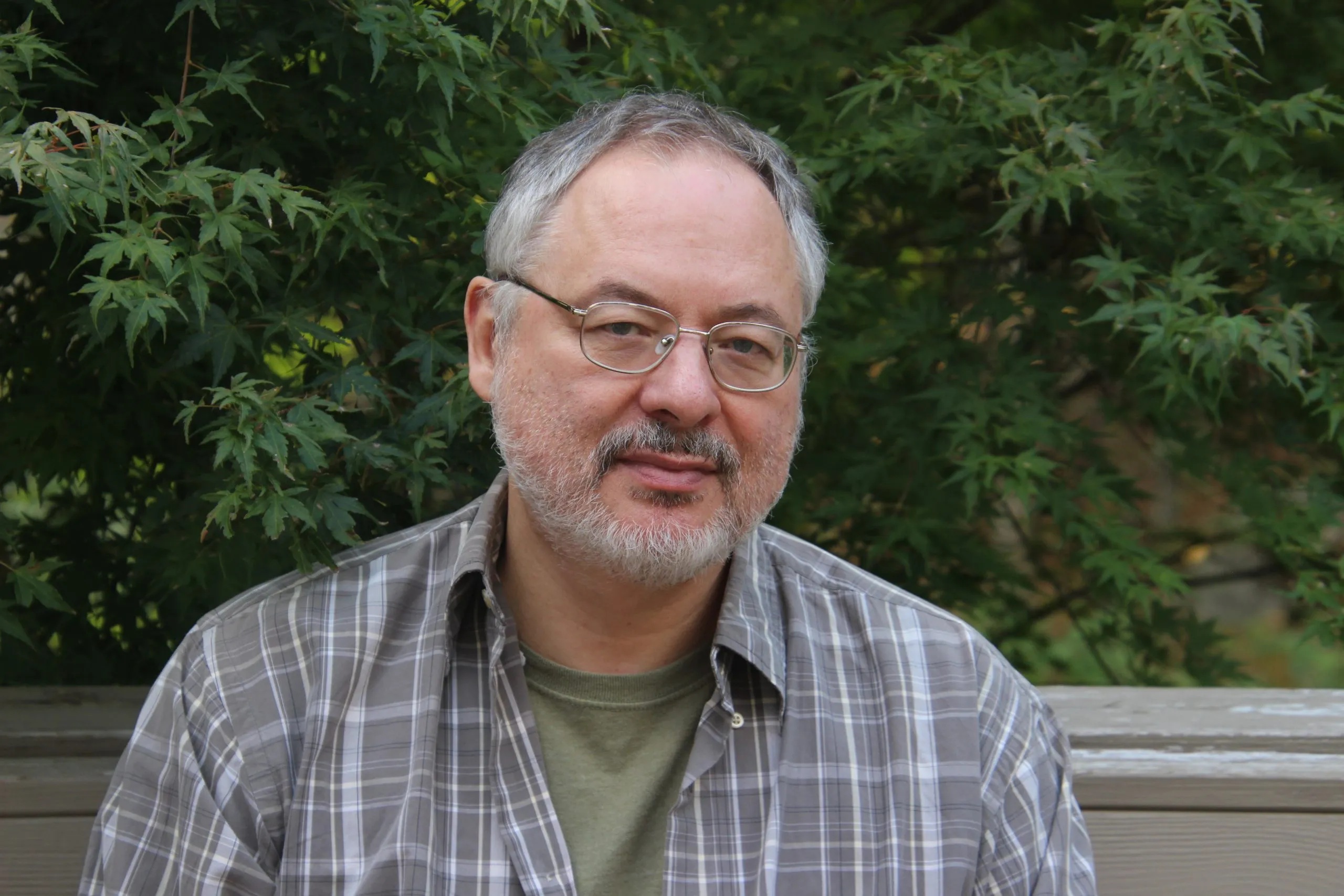
Peter Turchin is a complexity scientist and one of the founders of the new field of historical social science called Cliodynamics. He is an Emeritus Professor of Evolutionary Biology at the University of Connecticut, a Project Leader at the Complexity Science Hub Vienna and a Research Associate in the School of Anthropology at the University of Oxford. Trained as a theoretical biologist, he now works in the field of historical social science, where his research interests lie at the intersection of social and cultural evolution, historical macrosociology, economic history and cliometrics, mathematical modeling of long-term social processes, and the construction and analysis of historical databases.
Peter Turchin has published more than 200 articles in peer-reviewed journals, including a dozen in Nature, Science, and PNAS. He has also published eight books, including Historical Dynamics (2003), War and Peace and War (2005), Ultrasociety (2015), Ages of Discord (2016), End Times (2023), and The Great Holocene Transformation (2025). For more information see http://peterturchin.com/
| Monday, 27th April 2026 5 pm – 6.30 pm |
Lecture 1 - Cultural Multilevel Selection as Creative Destruction What are the social forces that hold together complex societies encompassing hundreds of millions of people? How did human ultrasociality—extensive cooperation among large numbers of unrelated individuals—evolve? The evolution from small-scale egalitarian groups to large-scale hierarchical societies such as states and empires during the past 10,000 years is an example of a major evolutionary transition (MET). Other METs were the evolution of eukaryotic cells, multicelluar organisms, and social insect colonies. A general evolutionary mechanism that explains such transitions is multilevel selection. In this introductory lecture I will discuss remarkable parallels between evolutionary theories and ideas in economics, most notably that of “creative destruction.” |
| Tuesday, 28 th April 2026: 11 am – 12.30 pm |
Lecture 2 - The Great Holocene Transformation: Cultural Macroevolution of Social Scale and Complexity During the Holocene the scale and complexity of human societies increased dramatically. Generations of scholars have proposed different theories explaining this evolution, which range from functionalist explanations, focusing on the provision of public goods, to conflict theories, emphasizing the role of internal class struggle or external warfare. I use a general dynamical model, based on the theoretical framework of cultural macroevolution (CME), and data in Seshat: Global History Databank to quantitatively test these theories. The best-supported model indicates a strong causal role played by a combination of increasing agricultural productivity and intensity of interpolity warfare, proxied by invention/adoption of military technologies. Overall, these empirical results provide support for two major theoretical ideas in CME: cumulative cultural evolution and (still controversial) cultural multi-level selection. |
| Tuesday, 28 th April 2025: 5 pm – 6.30 pm |
Lecture 3 - Cliodynamics of End Times: Elites, Counter-Elites and the Path of Political Disintegration Complex human societies, organized as states, have been around for 5,000 years. For a while, they can experience periods of internal peace and order, roughly a century long, but inevitably (at least, in the past) they eventually enter periods of high social unrest and political disintegration—End Times. My research, which combines analysis of historical data with the tools of complexity science, has identified the deep structural forces that undermine the stability of societies and drive them into a crisis. One of the most important, but little appreciated, such hidden forces is a perverse “wealth pump” that, under certain conditions, begins to transfer wealth from the “99 percent” to “1 percent.” If allowed to run unchecked, the wealth pump results in both relative impoverishment of most people and increasingly desperate competition among elites. Since the number of positions of real social power remains more or less fixed, the overproduction of elites inevitably leads to frustrated elite aspirants, who harness popular resentment to turn against the established order. I will illustrate these concepts with historical examples. |
| Wednesday, 29 th April 2026: 11 am – 12.30 pm |
Lecture 4- Our Age of Discord: A History of Possible Futures Social and political turbulence in the United States and Western Europe has been rising over the past decade. Cliodynamics, the new transdisciplinary field, which combines analysis of historical data with the tools of complexity science, has identified the deep structural forces that work to undermine societal stability and resilience to internal and external shocks. Here I look beneath the surface of day-to-day contentious politics and social unrest, and focus on the negative social and economic trends that explain our current “Age of Discord.” In America, the wealth pump has been operating full blast for two generations. In historical terms, our current cycle of elite overproduction and popular immiseration is far along the path to violent political rupture. In fact, today the USA finds itself in a situation that fits the definition of revolution, although, so far, fortunately a relatively non-violent one. The current focus of my research team is, how do we navigate our Age of Discord without descending into a hot civil war? |
Background readings
Turchin, Peter. 2023. End Times: Elites, Counter-Elites, and the Path of Political Disintegration (Penguin Random House, New York and London).
Turchin, Peter. 2025. The Great Holocene Transformation: What Complexity Science Tells Us about the Evolution of Complex Societies (Beresta Books).